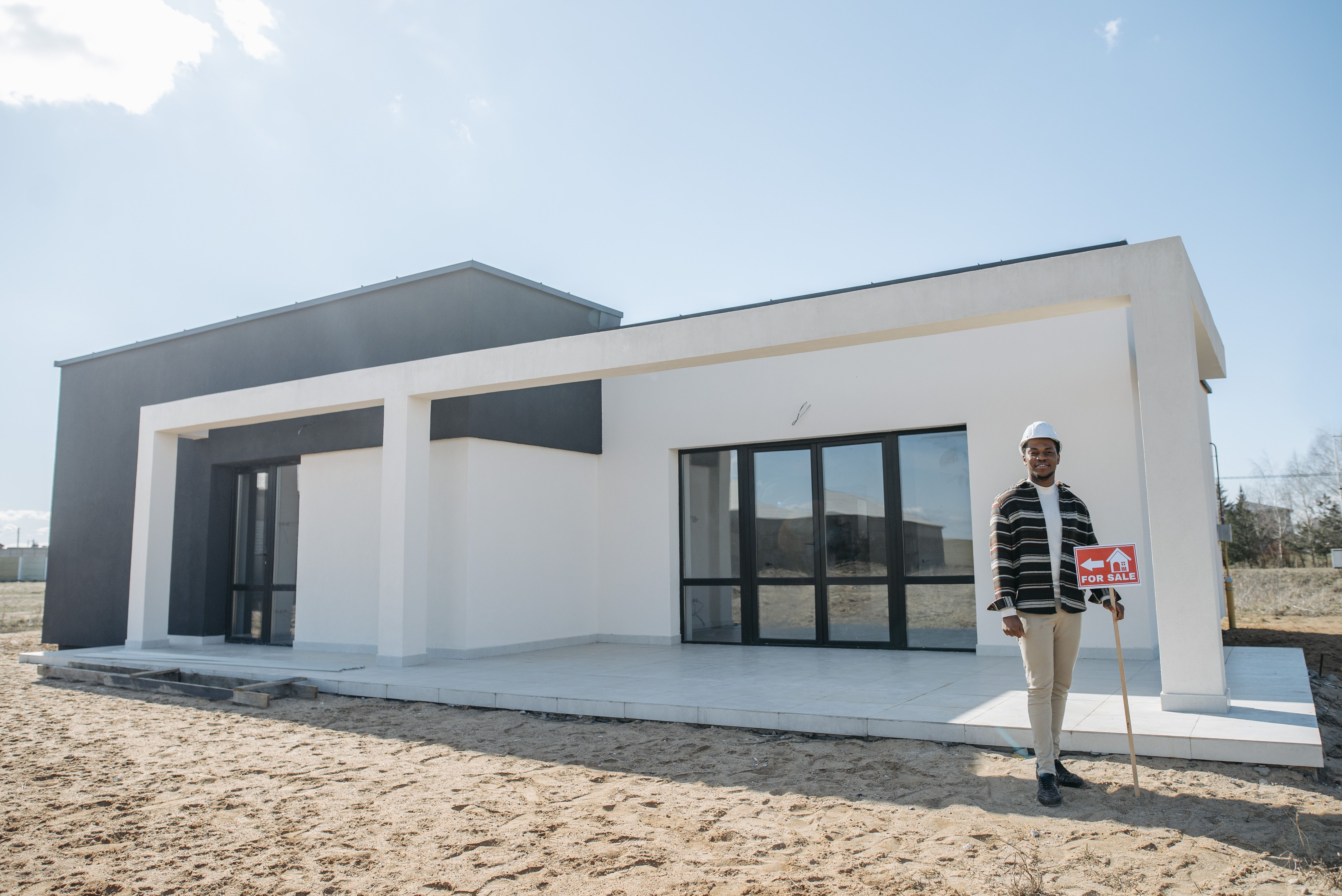
The Accessory Dwelling Units (ADUs) have become one of the fast-growing segments of residential construction across North America. Rise in housing cost, trends in multi-generational living, opportunities from rental income, and evolving zoning regulations are making homeowners to invest in ADUs as a practical way to maximize the usability and value of the property.
As a homeowner, if you are planning a backyard cottage, conversion of garage, basement apartment, or separate guest house understanding the ADU construction process is very critical to achieve the project successful.
What is an ADU?
An Accessory dwelling unit is an additional residence constructed on the same lot as a primary home. Kitchen, bathroom, bedroom space, utility connections and separate entrance were commonly included in ADUs.
Detached ADU have a description of separate structure in backyard, attached ADU have an addition connected to main house, garage conversion is converting the existing garage into living space, while basement ADU is transforming the basement into apartment and above garage ADU builds above an existing garage are the common ADU types.
ADU starts its growth from the year 2018 to 2025 as the growth rate of 12% to 80 % year over year.
The key market drivers include high mortgage rates, shortage of house, older parents moving in with family, demand for rental income, relaxing zone laws in many municipalities, and increase in remote work flexibility. Industry experts predict ADUs will remain as one of the strongest residential construction sectors through the remainder of the decade.
1. Rental income:
Many house owners use ADU construction as a long-term rental property.
Here are some examples, a studio ADU can give income of $1,200 to $2,500, a one-bedroom ADU gives $1,800 to $3,500, and a short-term rental can produce $2,000 to $6,000 or more per month.
The rental rates can vary significantly by the market.
2.Increased property value:
Research studies consistently show ADUs can increase the home values significantly. The benefits include additional liveable square footage, greater buyer appeal, flexible family housing options, and generating income potential. Many real estate professionals now view ADUs as the premium property features.
3.Multigenerational living:
ADUs provides housing for aging parents, caregivers, grown-up children, and extended family members. This arrangement usually offers privacy while maintaining proximity.
Before starting constructions, homeowners should evaluate several critical factors. The following are the site assessment checklist. This includes lot size, setbacks of the property, utility access, conditions of drainage, existing structures, and local zone regulations. A professional site analysis can be identified through potential construction challenges early.
ADU regulations widely vary by jurisdiction.
The common requirements include minimum lot size which varies, maximum ADU size 600 to 1,200 square feet, setbacks are from 4 to 15 feet, parking as it's required, height limits from 16 to 25 feet, and occupancy rules are totally local dependent. Failure to comply with local regulations can result in costly redesign unpermitted delays.
ADU design considerations:
A good design significantly has strong impacts on long-term functionality. Key design priorities in this space efficiency ensures every square foot matters effectively.
The popular features include open floor plans, Murphy beds, storage built-in areas, and multipurpose furnishings. While natural light with larger windows and skylights makes the small space feel much greater. The privacy design strategies include landscaping buffers, private walkways, strategic window placement, and insulation of sounds.
The construction cost may vary by region, materials used, design complexity, and labor market.
The cost range of ADU construction are garage conversion, $40k to $12k, conversion of basement, $60k to $15k, attached ADU may cost between $100k to $250k, but detached ADU ranges $150k to $400k. Sample cost allocation for the construction budget are foundation 10 %, framing15%, roof work 6% , wiring and electrical work 8%, HVAC 7%, plumbing work 8%, permits 4 %, interior work finishing 25%, design cost 7% and Contingency 10%.
The professionals always recommend the homeowners to maintain 10 to 15 % contingency fund.
A realistic project always helps homeowners to avoid frustration. The phase and duration of ADU construction timeline are design and planning, 1to 3 months, permit 1 to 4 months, preparation of site work 1 to 2 weeks, the construction work, 4 to 8 months, and the final inspection is of 1 to 2weeks. The average duration of total project is 6 to 12 months. The timelines may be extended because of complex permitting environments.
The modern ADU design has made energy efficiency as a major focus. The popular green building features are heat pump HVAC systems, high-performance insulations, intelligent thermostats, solar panels, windows with high energy efficiency, LED lights, and plumbing fixtures. Lower utility cost, improved comfort, and reduced carbon footprint are having high impact on ADU construction. Whereas the resale value will have a moderate impact.
The homeowners commonly finance ADU projects through:
Home equity loan which gives the advantage of fixed repayments, HELOC which provides flexible borrowing, and cash saving, which avoids interest cost. The other methods are getting Construction loan which gives project-specific funding and cash-out refinance which allows the homeowners to access their home equity.
Before selecting a financial strategy, financial advisors recommend analyzing projected rental income against borrowing cost.
1.Underestimating costs.
The unexpected expenses frequently arise from upgradation of utilities, permit revisions, issues from the soil, and the price fluctuations of the materials.
2.Ignoring local codes.
The building code violation can lead to fines, delays, and the cost of reconstruction.
3.Poor space planning.
The small units always require highly enhanced layouts. The poor design often results in limited storage, congested living areas, and lower rental appeal.
4.choosing the lower bid.
The cheapest contractor is most rarely result in effective option. Usually evaluate the license, insurance, references, the experience in ADU construction, and the warranty coverage.
Emerging Trends and Industry Update
In 2026, several trends are reshaping the ADU construction.
Prefabricated ADUs
Factory-built ADUs are gaining popularity as they offer labor cost reduction, improving the quality control, and faster installations.
Smart Home Integration
The modern ADU construction increasingly features smart locks, energy monitoring, remote climate control, and security systems.
Aging in place design
The doorways which are wider, zero-threshold showers, layouts that are easily accessible, and universal design principles were incorporated by the builders.
These features increase the long-term marketability and usability.
ADU Construction Success Checklist.
The confirm zoning compliance, budget establishment, hire qualified designer, obtaining permits, contractor selection, and utility capacity verification are the checklists to be done before the construction. During the construction, track cost, monitor schedule, conduct inspections, and the changes in the document are to be checked. The things to be checked after the completion of construction are final inspection approval, utility setup, updates of the insurance, and rental licensing, if it is applicable.
Conclusion:
A homeowner can make an ADU construction as one of the most valuable investment.
Beyond generating rental income, ADU always provide flexible housing solutions, increase the property value, and support the changes needs in the family. Success always depends on planning, budgeting, regulatory compliance, and in the selection of experienced professionals.
As housing demand continues to rise and the municipalities increasingly support the accessory housing, ADU constructions are becoming a main solution for house owners to seek financial returns and long-term utility of the property. An ADU can deliver decades of value, income, and lifestyle flexibility for the homeowners who are willing to plan strategically and invest wisely.
